NSW Commercial Battery Rebates: BESS4 & BESS5 Guide

Commercial battery storage has just become significantly more attractive for NSW businesses.
From 1 September 2026, new commercial battery incentives became available through the NSW Government's Peak Demand Reduction Scheme (PDRS).
The new incentives include two important categories for businesses:
BESS4 – batteries for small and medium businesses
BESS5 – larger commercial and industrial battery systems
Eligible businesses can receive a substantial upfront discount towards the installation of a commercial battery, with the NSW Government estimating incentives of approximately 20% to 40% of installation costs in some circumstances.
For businesses with high electricity consumption, large solar systems or significant peak demand charges, this can dramatically change the economics of commercial battery storage.
What Is the NSW Commercial Battery Rebate?
The incentive operates through the NSW Peak Demand Reduction Scheme.
Rather than being a traditional cash rebate paid directly by the Government, eligible battery installations generate Peak Reduction Certificates (PRCs).
These certificates have a financial value and can be used by participating providers to provide an upfront discount on the battery installation.
The objective is to encourage businesses to install batteries that can reduce electricity demand during periods when the NSW electricity network is under the greatest pressure.
What Is BESS4?
BESS4 is designed for smaller commercial battery installations.
Eligible systems have a combined usable battery capacity of:
More than 20kWh and up to 200kWh.
This makes BESS4 particularly relevant to businesses such as:
- workshops
- retail businesses
- offices
- restaurants and hospitality venues
- farms
- small manufacturing facilities
- warehouses
- automotive businesses
- clubs and community facilities
There are a number of technical and compliance requirements.
Among other requirements, eligible BESS4 batteries must be on the Clean Energy Council's approved battery list, installed by an appropriately accredited installer and installed in accordance with AS/NZS 5139.
A minimum customer payment of $5,000 per installation also applies.
All required planning and electricity network approvals must be obtained.
What Is BESS5?
BESS5 takes the scheme into a completely different scale of commercial energy storage.
It applies to eligible commercial and industrial battery systems with usable capacity:
Greater than 200kWh and up to 30MWh.
The incentive calculation is capped at the first 10MWh of battery capacity.
This creates opportunities for considerably larger installations at sites such as:
- manufacturing facilities
- industrial properties
- large agricultural operations
- cold storage facilities
- shopping centres
- large warehouses
- commercial developments
- high-energy-use businesses.
BESS5 systems have additional technical requirements reflecting the size and complexity of these installations.
These include fire-safety requirements, appropriate network and planning approvals and the requirement for the battery system to be internet-connectable and capable of being controlled by a Demand Response Aggregator.
Installing Solar at the Same Time Can Increase the Battery Incentive
One of the most interesting parts of the new scheme is the interaction between solar and batteries.
Businesses can install a battery without installing a new solar system, provided the other eligibility requirements are satisfied.
However, a higher battery incentive may be available where new or additional solar is installed within 90 days before or after the battery installation.
To access this higher pathway, the new solar capacity must generally be equivalent to at least 25% of the new battery capacity.
For example, a business installing a 200kWh battery may need at least 50kW of qualifying new solar capacity to access the higher solar-linked incentive pathway, subject to the scheme's eligibility and calculation requirements.
This creates a strong incentive for businesses to consider solar and battery storage as one integrated energy project.
How Much Is the Commercial Battery Rebate Worth?
There isn't one fixed rebate amount.
The value depends on factors including:
- battery capacity
- battery inverter capacity
- whether qualifying new solar is installed
- the site's location
- the number of Peak Reduction Certificates created
- the market value of those certificates
- compliance and administration costs
The NSW Government has indicated that eligible businesses could receive discounts of approximately 20% to 40% of battery installation costs.
For larger projects, this can translate into substantial amounts.
The NSW Government has provided examples including an incentive of approximately $37,000 for a smaller business battery project and approximately $355,000 for a medium-sized business such as a dairy farm, although actual incentives will vary from project to project.
Can the NSW Battery Incentive Be Combined With Other Solar and Battery Incentives?
Potentially, yes.
This is where the commercial energy market becomes particularly interesting.
Depending on the system and eligibility requirements, businesses may be able to combine NSW commercial battery incentives with applicable Australian Government incentives.
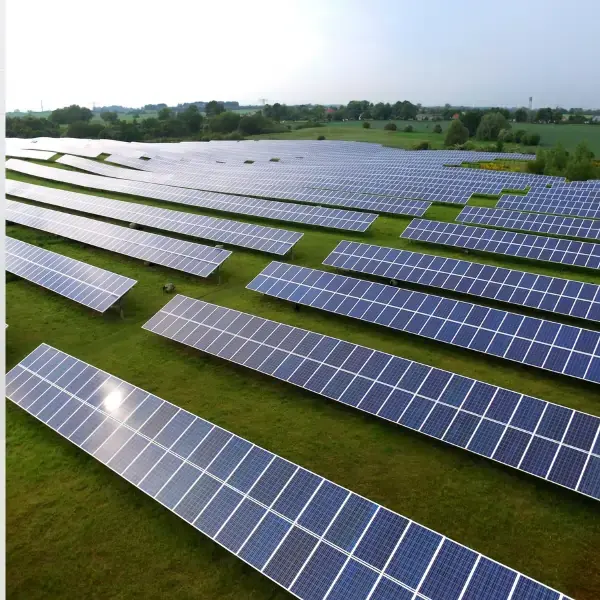
At the same time, the Federal Government has announced the expansion of the Small-scale Renewable Energy Scheme for commercial solar systems from 100kW to as much as 1MW.
This means businesses considering a new solar and battery installation should assess the entire project rather than looking at each technology separately.
Planning Approval Is Important
Commercial battery installations aren't simply a matter of selecting a battery and installing it.
The NSW scheme specifically requires the installation to have the necessary planning and network approvals.
Depending on the battery size, site, building and proposed installation, this may involve development approval or another applicable planning pathway.
Larger BESS5 installations can also involve considerably more detailed fire safety, engineering, network and planning requirements.
These requirements should be considered early in the design process.
Is a Commercial Battery Right for Your Business?
A battery isn't automatically a good investment simply because a rebate is available.
The starting point should be understanding how your business actually consumes electricity.
Innovate Energy can assess:
- interval electricity consumption
- existing solar generation
- proposed solar capacity
- peak electricity demand
- battery charge and discharge opportunities
- available BESS4 or BESS5 incentives
- network requirements
- planning requirements
- expected energy savings
- project payback.
For some businesses, the best solution may be a relatively small BESS4 battery.
For larger industrial sites, a BESS5 system of several hundred kilowatt-hours or even several megawatt-hours may make considerably more sense.
A Major Opportunity for NSW Businesses
The introduction of BESS4 and BESS5 represents one of the biggest changes to commercial battery economics in NSW.
Combined with falling battery costs, larger commercial solar incentives and increasing electricity costs, businesses now have significantly more reason to investigate solar and battery storage.
The key is getting the system design right.
Talk to Innovate Energy about a commercial battery or solar and battery feasibility assessment. We can assess your energy usage, available incentives and the appropriate system size for your site.